太原理工大学黄棣&杜智等:载气微针——推动药物深层释放并发挥固有生物活性
- 2026-09-24 21:49:35
太原理工大学黄棣&杜智等:载气微针——推动药物深层释放并发挥固有生物活性
未来研究方向强调构建智能化、刺激响应型微针,融合多学科技术以提升递送深度,并建立标准化、可规模化的制造体系。总体而言,本工作旨在推动气体释放微针技术向精准、高效且可控的治疗应用发展,弥合实验室研究与临床转化之间的差距。 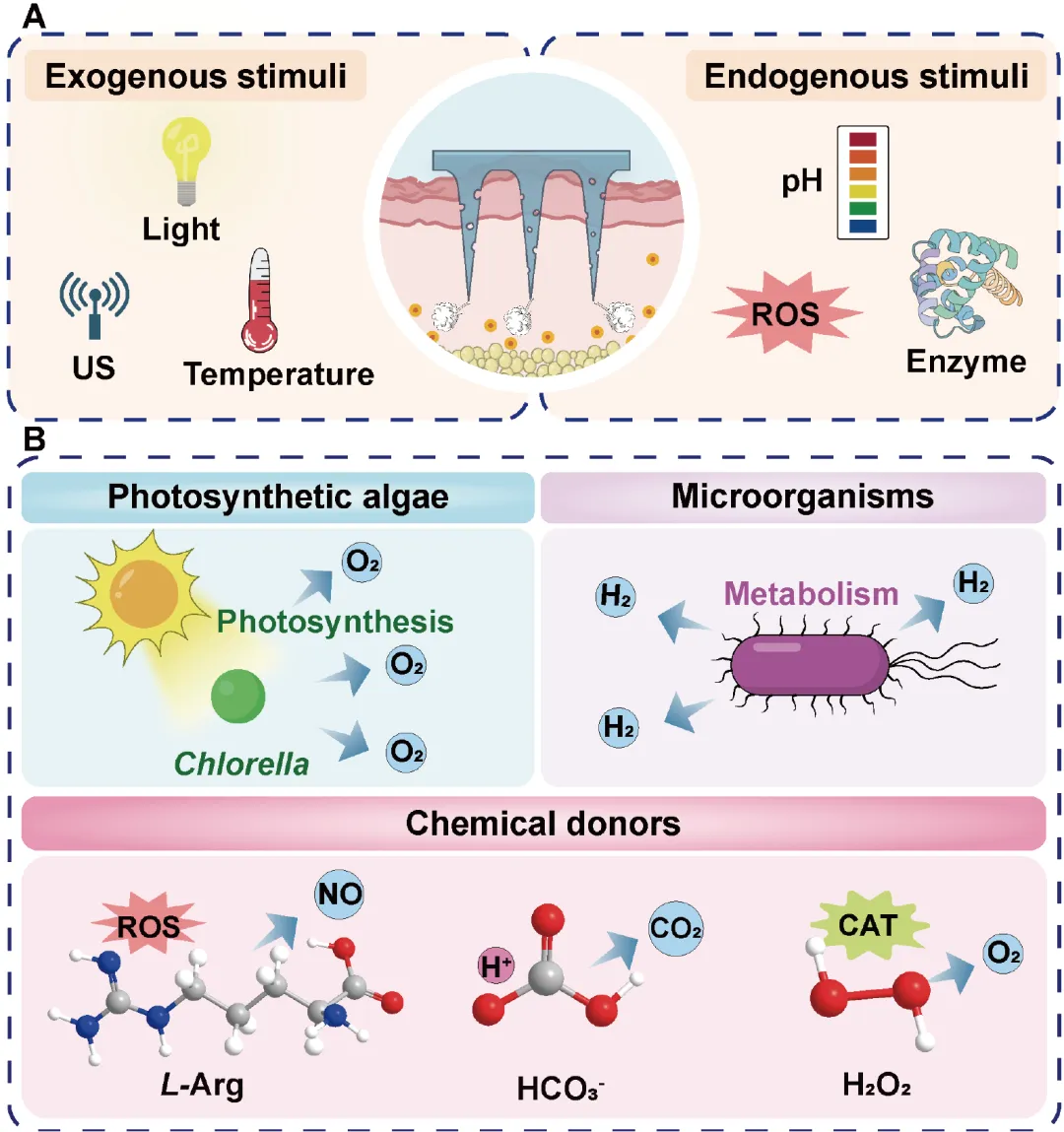
Figure 1.Schematic diagram of core strategies for fabricating gas-releasing MNs. (A) Exogenous and endogenous stimulus enable spatiotemporally selective release of therapeutic gases from MNs. (B) Typical gas sources for gas-releasing MNs: photosynthetic algae produce O2via photosynthesis; specific microorganisms generate H2 through metabolism; and chemical donors release NO, CO2, or O2 upon reaction triggering. 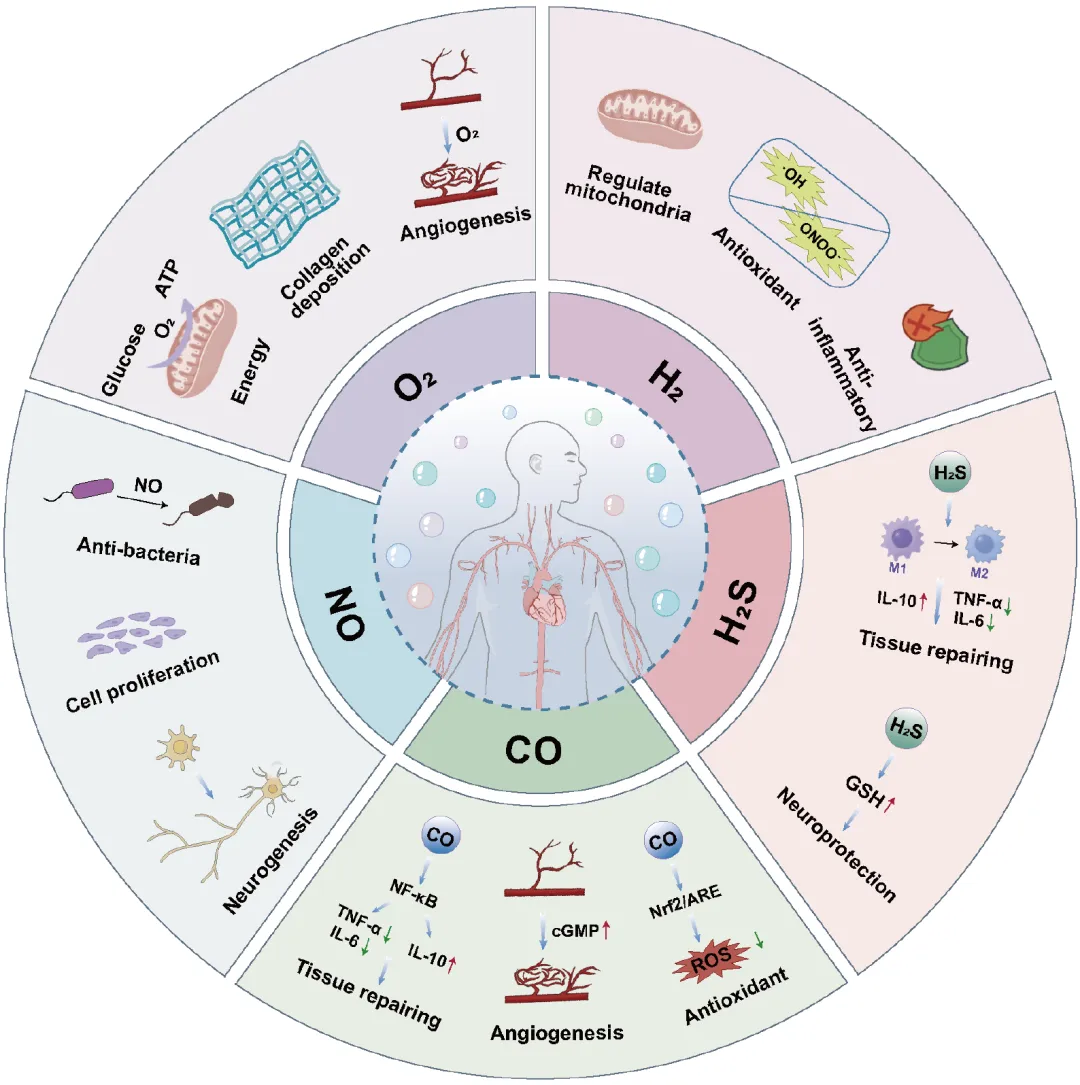
Figure 2.Physiological functions of various therapeutic gases. 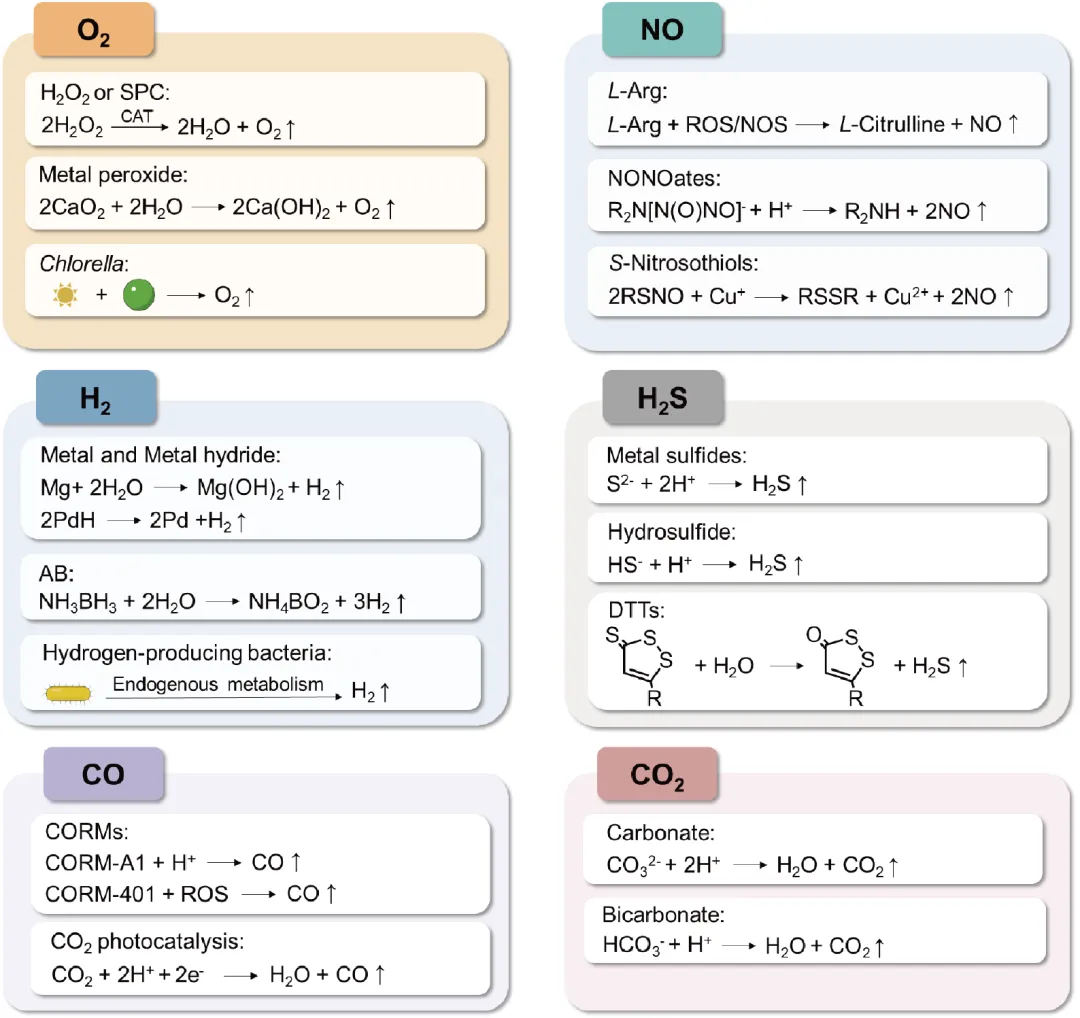
Figure 3.Summary of the typical chemical reactions by which various donors generate therapeutic gases, including O2, NO, CO, H2S, H2, and CO2, highlighting their corresponding release mechanisms and representative reaction equations. 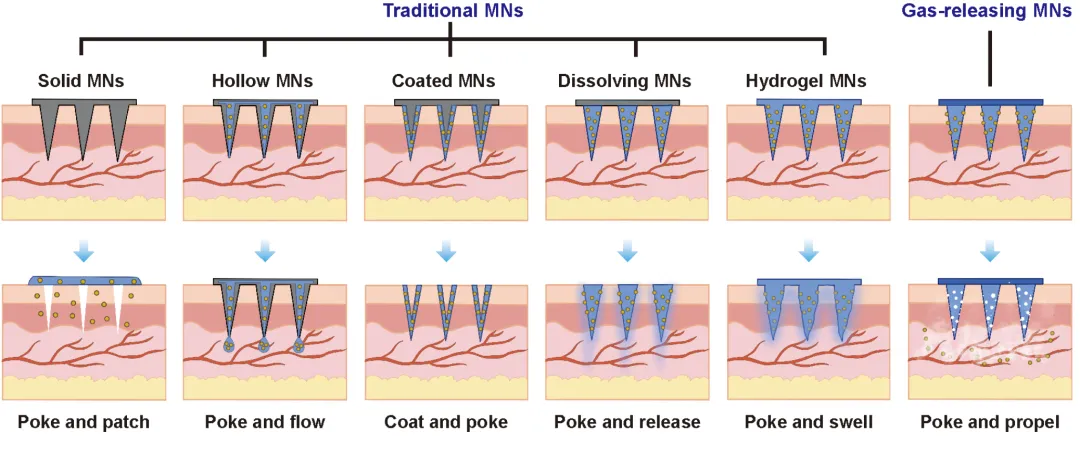
Figure 4.Drug delivery mechanisms for various types of MNs. 【作者简介】 Chunqing Lv(吕春青) is a Master’s student under the supervision of Prof. Zhi Du at the College of Artificial Intelligence, Taiyuan University of Technology (TYUT). Her research focuses on the innovative design and fabrication of gas-releasing microneedles, exploring the application potential of microneedle-based drug delivery systems in the field of biomedical engineering. Zhi Du(杜智) is an associate professor in the College of Artificial Intelligence, TYUT. He received his PhD degree in 2019 under the supervision of Prof. Xiaogang Qu at Changchun Institute of Applied Chemistry (CIAC), Chinese Academy of Sciences. Then he joined the group of Professor Mi Hee Lim as a postdoctoral fellow at Korea Advanced Institute of Science and Technology (KAIST). His scientific interests focus on the design and fabrication of multifunctional biomaterials for disease theranostics. Di Huang(黄棣) obtained his PhD degree in 2012 in biomedical engineering from Sichuan University, China. Now he is a full professor at the Research Center for Nano-biomaterials & Regenerative Medicine, College of Artificial Intelligence, TYUT, China. During the period 2018–2019, he joined Dr. Yu Shrike Zhang’s Lab in Harvard Medical School for 1 year as a visiting scientist. His research is mainly focused on biomaterials, bio-printing, and organ on chip. 
Chunqing Lv, Ergui Luo, Wenjuan Wang, Zhi Du, Di Huang. Microneedles with therapeutic gas: integrating drug propulsion and intrinsic bioactivity. Sci. China Mater. (2026).
基于微针的经皮递送系统通过在角质层中构建微尺度通道来增强皮肤通透性,从而实现治疗药物的可控与持续释放。然而,传统微针设计主要依赖被动扩散机制,导致药物穿透深度较浅、空间分布范围有限,这在复杂生物环境中显著限制了其治疗效果。近年来,研究人员将气体治疗与微针平台整合,以克服上述局限。释放的治疗性气体不仅可通过气体推进促进药物向更深层组织渗透,还具有内在的生物活性,从而实现协同治疗效果。
近日,太原理工大学黄棣教授和杜智副教授等在Science China Materials发表综述论文,系统总结了气体释放微针系统的作用机制、设计策略及其应用,并重点讨论了若干关键的科学与转化挑战,包括气体释放的精确调控、多气体协同系统的开发、向深部组织治疗的拓展,以及生物安全性的保障。
文章信息
https://doi.org/10.1007/s40843-025-4027-0
 点击左下角“阅读原文”,阅读以上文章PDF原文
【扩展阅读】
Science China Materials 2025年度优秀论文评选结果发布!
2026新锐科学家专刊 || 同济大学胡勇等:炎症微环境触发的鸟苷微针治疗口腔黏膜炎
西北工业大学李鹏&严熠博等:抗菌、促血管生成和免疫调节微针清除耐药细菌感染并加速伤口愈合
点击阅读全文,了解更多
本文来自网友投稿或网络内容,如有侵犯您的权益请联系我们删除,联系邮箱:wyl860211@qq.com 。
随机文章
-
 10个月宝宝每天需要喝多少奶粉?
- 太原南中环超大露台|单价一万出头|近地铁
- 太原中西医结合医院招聘超声医师1名、中药师1名
- 太原尖草坪省20万买96平朝南两居 森林公园
- 太原长风街精装全新四居室 带200多平大露台 总价100多个即可拿下
- 太原市小店区都可以,随时联系我 #太原小店区 #租房 #买卖房 #二手房 #租房
- 太原中西医结合医院人才招聘
- 躬行实践 青春闪光|太原市第二实验中学校七年级综合实践活动掠影
- # 太原万柏林丨省20万买83平精装两居
- 30岁,在山西太原,人在家中坐,锅从天降!我家大门被建设银行信用卡的“装修贷”贴了催收涵?
- 乐翔伴学 | 太原市2022-2023学年第二学期期末考试四年级试卷,可打印,可下载,建议收藏

